If you own a home in Sammamish, WA, keeping garage door repair work safe is a top priority. Garage doors are heavy, spring-loaded systems that can cause injury or property damage when they fail or are serviced incorrectly. This guide focuses on practical steps homeowners can take to reduce risk, understand when a residential service is required, and prepare for a safe, efficient repair.
Why safety matters for garage door repair
Garage doors and openers combine strong springs, cables, rollers, and electrical components. Even routine adjustments can become dangerous without the right precautions. Safeguarding your family and property starts with simple preparation and clear expectations for anyone working on the system.
Pre-repair checklist for homeowners
Before any garage door repair begins, walk through this checklist to minimize hazards and speed the job.
- Clear the area inside and outside the garage so technicians have full access to tracks and springs.
- Move vehicles and bikes at least 10 feet away from the door path.
- Turn off the opener and unplug the unit if accessible; note the location of breakers.
- Secure pets and children in another room while work is underway.
- Document unusual noises, timing of failures, or when the door last had maintenance.
- Take photos of damaged panels, hardware, or opener labels; this helps technicians prepare parts.
For homeowners wanting seasonal advice and local updates, see our blog for short articles tailored to Sammamish weather and maintenance schedules.
Tools, protective gear, and what not to touch
Never attempt to service the torsion spring, cables, or track alignment without the proper tools and training. These systems store a lot of energy and can cause sudden releases that result in injury.
Essential safety equipment
- Safety glasses to guard against flying debris.
- Work gloves with good grip when handling hardware.
- Lockout tag or labeling for the circuit breaker controlling the opener.
- Winding bars and rated sockets for spring work (only for trained technicians).
Parts homeowners should not adjust
- Torsion springs or spring anchor brackets.
- Bent or frayed cables.
- Track welds or roller stems requiring press-fit adjustments.
- Opener motor internals.
If you’re unsure whether a task is safe, treat it as a job for an experienced technician. For a clear list of professional services we offer, visit our services page.
Weather considerations in Sammamish, WA
Sammamish’s wet winters and seasonal temperature swings affect components differently. Moisture accelerates corrosion on cables and rollers, while colder months make metal parts less forgiving.
High-humidity and rain
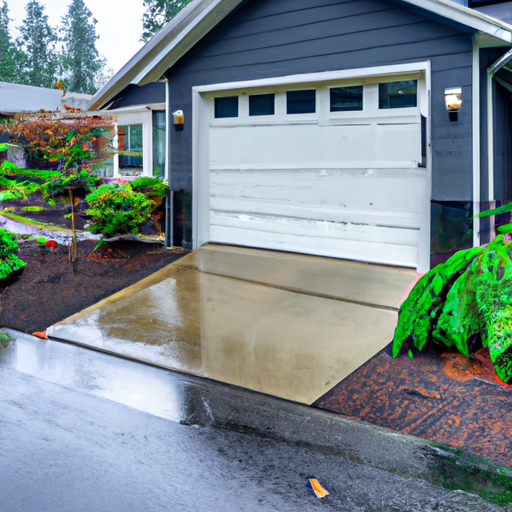
Inspect bottom seals and threshold weather stripping after prolonged wet weather. Rusted fasteners and frozen rollers increase friction and stress on springs and openers.
Cold snaps and temperature shifts
Cold weather can stiffen lubricants and change spring tension slightly. If a door drags or the opener strains during chilly mornings, schedule an inspection before a spring failure occurs.
How to evaluate risk and decide when to call a pro
Knowing when to call for professional garage door repair prevents small issues from becoming serious hazards. Use these practical signs to decide:
- Visible fraying or separation in cables — requires immediate attention.
- Uneven door panels or a door that opens crookedly — track or spring problem.
- Loud bangs during operation — possible spring or cable failure.
- Opener won’t hold the door in place or reverses unexpectedly — safety sensors or force settings need testing.
For a straightforward estimate or emergency scheduling, our team is available via the contact page to arrange a visit. A timely assessment saves money and reduces injury risk.
Safe temporary fixes you can use while waiting for service
When immediate repair isn’t possible, follow low-risk temporary steps to reduce danger:
- Do not fully open or close the door if cables are visibly damaged; keep it in the closed position and block access beneath it.
- Disconnect the opener to prevent accidental use and lock the garage from the inside if security is a concern.
- Place a “Do Not Use” sign on remotes and entry switches to alert family members.
- If a panel is loose, remove objects beneath the affected area and avoid parking under the door.
Maintenance habits that reduce repair frequency
Regular, simple maintenance extends the life of your garage doors and lowers the likelihood of urgent garage door repair visits.
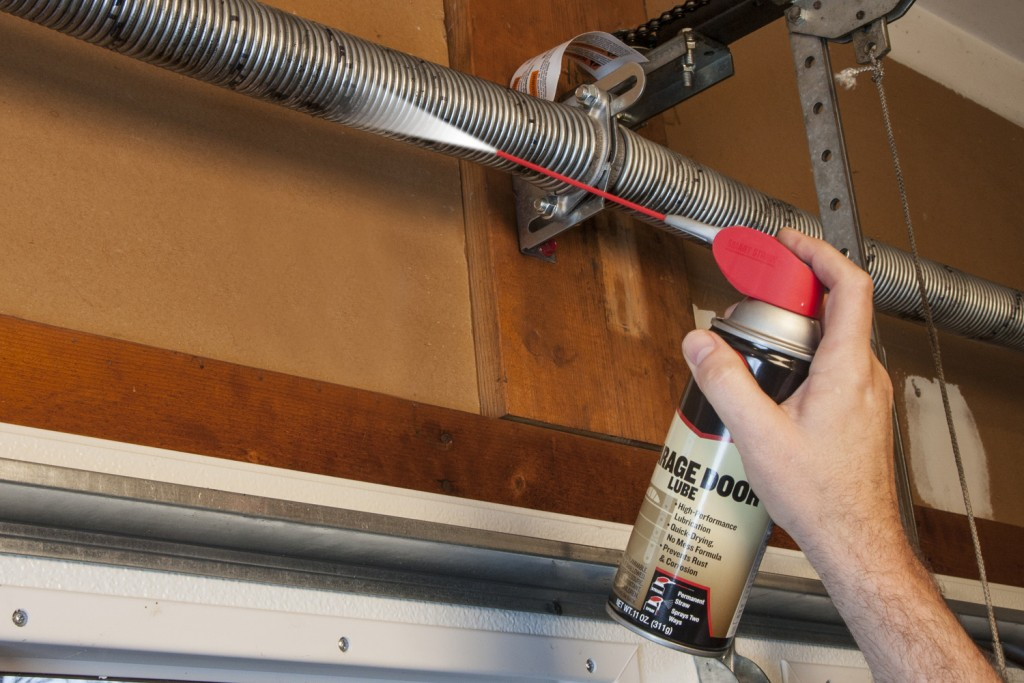
- Lubricate rollers, hinges, and bearings annually with a silicon-based or lithium grease.
- Inspect and replace weather seals to prevent water pooling and rot at the base.
- Test safety reversal systems monthly: place a small object under the door — it should reverse on contact.
- Schedule a professional tune-up every 1–2 years for spring tensioning and balance checks.
Budgeting and timing for common repairs in WA
Homeowners often ask about expected costs and timelines for garage door repair in the area. Prices vary with part quality, door size, and labor. Typical ranges in the region:
- Spring replacement (one or two springs): often completed in 1–2 hours; expect a mid-range parts-and-labor cost depending on spring type.
- Cable replacement: 1–2 hours; costs are moderate unless tracks or drums are damaged.
- Opener replacement: 2–4 hours; includes programming and sensor alignment.
- Panel replacement or large structural repairs: may require ordering parts and multiple visits; plan for several days.
Local permit requirements are rare for basic maintenance, but larger structural changes or garage conversions may trigger building permits in King County. Check with the city before major upgrades.
Warranty, documentation, and insurance
Keep receipts and work orders from any garage door repair. Manufacturer warranties often cover specific parts, while labor warranties differ by company. If storm damage or a mechanical failure causes property damage, your homeowner’s insurance may apply — document everything with photos and dated notes.
Wrapping up: a safer approach to residential garage door repair
Simple prevention, clear communication with technicians, and knowing what not to do will keep your family safe and reduce costly emergency repairs. Regular maintenance and timely professional interventions are the cornerstones of long-term reliability for garage doors in Sammamish, WA.
Frequently asked questions — Sammamish, WA
Q: How does Sammamish weather affect garage door springs and cables?
A: The wet, cool climate in Sammamish increases corrosion risk. Springs and cables exposed to moisture can rust faster. Inspect hardware annually and schedule replacement at first sign of rust or fraying to avoid sudden failures.
Q: How long will a typical spring replacement take in a residential service call?
A: Most torsion spring replacements for standard residential doors take about 1–2 hours on-site. Larger doors or dual-spring systems may take longer. Technicians carrying common sizes can often complete same-day work.
Q: Are permits required for garage door repairs or replacements in Sammamish?
A: Minor repairs and like-for-like replacements usually do not need a permit. Structural changes, openings in load-bearing areas, or conversions may require permits. Check City of Sammamish codes or consult your technician before major work.
Q: What is a reasonable pricing range for emergency garage door repair in the area?
A: Emergency service rates vary by time and part needs. Expect a service call fee plus parts and labor. Simple overnight fixes may be similar to regular rates, but late-night or weekend emergency visits typically cost more. Ask for an estimate before booking.
Q: Do garage door repairs come with a warranty in Sammamish?
A: Most reputable companies provide warranties on parts and limited labor warranties for repairs. Manufacturer warranties cover parts defects differently. Always get warranty details in writing before work begins.
Helpful local resources in Sammamish, WA
- Garage Door Repair Seattle
- Garage Door Repair Bellevue
- Garage Door Repair Redmond
- Garage Door Repair Kirkland
- Garage Door Repair Mercer Island
- Garage Door Repair Edmonds
- Garage Door Repair Issaquah
- Garage Door Repair Tacoma
- Garage Door Repair Everett
- Garage Door Repair Bothell
- Garage Door Repair Sammamish
- Garage Door Repair Renton
- Garage Door Repair Lynnwood
- Garage Door Repair Woodinville
- Garage Door Repair University Place
- Garage Door Repair Gig Harbor
- Garage Door Repair Lakewood
- Garage Door Repair Puyallup
- Garage Door Repair Mukilteo
- Garage Door Repair Vancouver
- Garage Door Repair Kenmore
- Garage Door Repair Burien
- Garage Door Repair Auburn
- Garage Door Repair South Hill
- Garage Door Repair Yarrow Point
- Garage Door Repair Clyde Hill
- Garage Door Repair Port Townsend
- Garage Door Repair Duvall
- Garage Door Repair Snoqualmie